Why I hate Credit Card

I have always been wary of using credit cards for any transactions. Secuirty is one major aspect which actually pushes me to the limit of having a phobia of using credit card for any transaction. Here is a simple example of why I fear so much. When yesterday I wanted to change my billing address of one of my credit-card from a top Indian bank, this is the procedure I had to follow :

- Call up the customer care (I dont know who is sitting there. Is he a employee of credit card company or just a call-center employee)
- Answer all the queries from the other side which mostly involves personal information (Who stops the person at other side form mis-using that information)
- It is upto the discretion of the person at other end to go into how much details for getting to know the personal information (which he probably verifies, indicating that he already has access to all my personal information including the transactions I made). The idea behind this is to verify your identity. I still cannt believe that technology has not made such a progress as to eliminate this middle man. I should be able to change my address through some more secure way without any middle person.

Anyway the other reason I fear using a credit card is the way credit card companies try to extort money out of poor consumer with legal means. Most of the time it is usually a financial burden while using credit card than the comfort and convinience of using it. There is a phenomenal rise in the number of credit card users in India, because people find it easy to get money on credit (as high as few lakhs ruppees, no question asked) and the convinience of using it (no paper work, no queues to withdraw money, no hassels) and along with the claim of security the credit card companies proclaim (you dont have to carry cash, and if the card is lost just a single call to the customer care will prevent its misuse). But most of the people, espeically in India, and unaware of the fine print in the rules and conditions along with the smooth way credit card companies dupe the consumers.

It is probably one of the most profitable business for the banking institutions. I want to just clear some of the points which might take away some of the sheen of using a credit card and put some reality and insight into this whole business.

The money you get from credit card is similar to a loan just a bit more sophisticated. If you spend 50,000 Rs with your credit card today, essentially you took this money from the credit card company. So obviously you have to pay an interest on that loan. This loan (the money on credit you took) does not require you to submit any documents (as a normal loan would) or to prove your credibility. I remember that when I applied for a credit card, I did not reuired a lot of documents to submit. It was usually just fill up a form and submit the latest pay-slip. So a credit card company doesnt have much information about their customers and the risk of defaulting on loan is much higher. Someone can spend few lakhs using a credit card and actually vanish, and the credit card companies cannt do much. So obviously this loan is much riskier than any other loan. This compels the card comapnies to charge a much higher interest rate. This can be as high as 42% annually (thats what my credit card statement says).

Here is an interesting aspect about "
interest on outstanding balance". Almost every credit card company allows you to repay the loan (the balance) on a revolving credit basis. This is a extremely fine trick. So assume this month you spent 10,000 Rs through your card and when the statement comes, the company asks you just to pay back the "minimum amount due". This could be as minimum as 500 Rs. Assume that the company levied say 5% interest. So with a spending of 10,000 Rs, the outstanding balance is 10,000 + 5% of 10,000 (500Rs) + service tax (12% = 1200Rs). Let us assume no other charges (I will talk about other charges later on). So the total outstanding balance is 11700 Rs. Now you paid back Rs 500. So the next month, the outstanding balance is 11200 Rs. When the next month statement comes, you can see that the 5% interest is applied on 11200 Rs.

How can someone justify this 5% interest on the entire outstanding balance. The loan you took was for 10,000 Rs, out of which Rs 500 you paid back. So the 5% interest should be charged on 9500 Rs. But it is also charged on the previous interest and service charge you paid along with any other fees. What essentially is happenning is a compunding interest rate, which really can grow to an exhorbitant payback to the card company. The best way to kill this compounding is to NEVER use the revolving credit.

Let me tell you first of few terminologies:

Purchase Date --> Date on which you used the credit card for some purchase.
Billing Date --> Date on which your card company creates the bill.
Staement receive Date --> Usually the date when you receive the statement
Last Payment Date --> The date when you are supposed to pay the bill.



Grace Period = Last Payment Date - Purchase Date. This is essentially the point when you took loan (purchased something) and the date after which you will be charged interest and whole assortments of fees. This is an important period to use the card optimally. I will discuss this later.

Credit card companies also charge an assortment of lucrative fees.

Late Payment Fees: This is one fee I hate to pay. I have paid it many times and usually it is usually very high like Rs 500. A credit card company can even charge this fee if your payment is just a single day delay. Worse, the credit card company may determine that you have borrowed your entire outstanding balance from the time of purchase until the time of payment, eliminating the "grace period".

Annual Fees: This is a charge just to keep your card active. A simple straight gain for card companies.

Cash Withdrawal Fees: Some card companies has the facility to withdraw cash from ATMs using the credit card. There is usually some fee attached to it.

Balance Transfer Fees: Now a days I have seen some card companies urging customers to transfer the balance on any of their other credit cards to this company card with the benefit of low interest. They might apply some charge for this transfer.

Imagine the amount of money you have to shell every time you use the card. This is not the only charge. The credit card company will also charge the shopkeeper (something like 2%) for any transaction made. The shopkeeper pushes this 2% charge to the end consumer. Whenever I want to purchase anything from some shop, the shopkeeper will tell me that I have to pay the 2% extra if I plan to use the card. So at every point you as a consumer has to shell out money.

Prospect Theory


Which of the following investment options you would choose:

Stock A at Rs100 has a 7% chance of dropping below Rs100 in the next five years.
Stock B at Rs200 has a 93% chance of gaining from this price level in the next five years

I was reading an interesting theory which explains the human psychology in making decision as the above question. It is called prospect theory.

The theory tells that while choosing between the two options your mind executed two operations:
  • Editing
  • Evaluation
The editing phase is preliminary analysis of the offered prospects while the evaluation phase is when the prospect with the highest value is chosen from among the edited prospects.

In the first, the different choices are ordered following some heuristic so as to let the evaluation phase be more simple.


The value function (sketched in the Figure) which passes through this point is S-shaped and, as its asymmetry implies, given the same variation in absolute value,
there is a bigger impact of losses than of gains.

This loss aversion refers to the tendency for people to strongly prefer avoiding losses than acquiring gains.

I hope you have seen through the quiz posted above. Both the options indicate same thing. A 93% chance of gaining is equivalent to 7% chance of dropping.

Reverse Mortgage

I talked about having a scheme for banks to provide money on the house I own. It seems someone has heard it. The National Housing Bank has launched a new scheme called the reverse mortgage through which you can get the money for your home that too without selling it.

Confused about NAV?

When I started reading about Mutual Funds, I use to read about NAV as a measure of fund performace and I always got confused as to what exactly is this parameter. Then someone simplistically told me "It is the value of one unit of fund". That made sense since it gave me info about how rich I am with respect to my investment. For example if I have 400 units of a mutual fund and the NAV for that fund is 12 Rs, essentially at this point I have 4800 Rs (minus the administrative charges of the fund). But then how is the NAV calculated from the fund's perspective.

Here is a simple example :

Assume that the mutual fund has an initial investment of 100 units with each unit is worth Rs 10. Hence, the total amount with the fund is Rs 10,00. Let us now say that this amount is invested in one share of Reliance (say Rs 5,20) and one share of Sify (Rs 4,40) and the balance Rs 40 is held in cash

Let's assume that after some time, the value of the shares goes up to Rs 780 (Reliance), Rs 520 (Sify) and expenses incurred by the fund amount to Rs 50. The NAV will be:

(780+520+40-50) / 100 units = Rs 12.90

Thus the fund have achieved an absolute return of 29 per cent during the period. Pretty neat ..uh !!

Why debt funds are not same as FDs

Harsha commented in one of my previous posts about not mentioning debt funds. I do not consider debt funds as a good investment option since there are lot of negatives attached to it then the gains. As mentioned by The Hindu a debt and gilt funds usually invest in long-term borrowings of the government or corporate issuers at fixed rates of interest. These funds earn their return from two avenues — the interest payments that they receive from bonds/gilts and the fluctuations in the market price of their holdings.

The most negative aspect of debt fund compared to FD is that the returns are not assured due to linking with markets. Even after taking this risk, there are no tax breaks. A flat divident distribution tax (around 14%) is applicable to the mutual fund house which obviously cuts it out of the investor money. The returns are also not spectacular and hovers around 6-7 % which post distribution tax comes out to be 5.9%.

Compare this with a bank FD say for a yearly tenure. The interest rate is 7-8%, which comes out to be 5.1% post tax for the highest tax bracet. It goes higher(even about 6.5%) for people in lower tax bracket. Thus the biggest dis-advantage is that despite the risky nature the returns are more or less same, then why an investor should take the additional risk. The only advantage is the liquidity since there are no entry or exit loads (the charge applied by fund house on pulling out the money).


Is financial planning funny?

Have you ever imagined that even a serious subject like financial planning can tickle your funny bones. For example, when I read about Life Insurance it seem to be kind of funny. If you purchase a life insurance product, you are paying money for something you will never use !! Life insurance implies the money that goes to your nominee when you die. So obviously you cannt make use of your life insurance. The worst part is that the agents use your "guiltiness" to sell their product. They will pitch the product saying "Have you ever thought of what will happen to your dear ones if you suddenly die?" "What your wife will do?" And this set the ball rolling in your mind, you feel guilty and buy the product.

Take another example, my parents are living a retired life. They get a meagre pension of 5000 Rs per month after serving the government for their entire life. If I try to analyse their situation, they put their majority of saving into buying a house. Now thats funny since today they are large asset-owner but cash-deprived. All their sons are well-setteled (enough to take care of their own families), so what is the use of such a huge house sitting out there while my parents struggle for cash. And they wont accept money from any of their sons.

There should be some scheme reverse of home-loans. I mean when you want to buy a house, you go to a bank, take a loan and give back money in the form of EMI. The idea is that the house is a mortgage with the bank until you repay the entire loan. Wouldnt a reverse scheme be nice. For example, the bank might have a contract with the elderly people who are house owners. Once the person retires and wishes to enroll in the scheme, he will sign a contract with the bank. As per the estimated price of the house, the bank will pay a monthly EMI to the customer (say 10,000 Rs per month) till the customer is alive (which could be say 20-25 years after retiring at the age of 60 years). After his death, the house ownership instead of going to the legal heirs will go to the bank. The bank can then do whatever it wants. Isnt that a win-win situation for everyone.

Negligence leading to fraud

I was just reading the Outlook Money and came across a customer complaining. Here is what happened to him:

He had a HSBC account in Delhi which was designated to receive his investment income. So when he shifted to south india, he didnt closed the account. He started using a new saving account there and occassonaly would use the Delhi account using an ATM card. Some two years ago his ATM card became inactive and hence he stopped using the account. Now when he checked, he realised that someone has fradulantly withdrawn 29,000 Rs using an ATM card. He was shocked.

This is purely a case of negligence on his part. He should have changed the address of communication, since the bank might have issued another ATM card on his old address along with sending him a PIN number. Someone must have used this ATM card and pin code to access his funds.

As soon as you shift your location, you immediately have to inform all the banks you deal with about the change of address. But there are banks like SBI, where change of address is a tedious process. I once went to the SBI to change my address from delhi to hyderabad branch and what they told me shocked me. They told me that I first have to submit my pass-book/cheque book and all other bank account details in the hyderabad branch, then they will send a request of cancellation of my account in the delhi branch and create a new account in this branch. This entire process might take 2-3 months.

Questions to ask your financial advisor

In my previous post I talked about being alert despite using the services of a financial advisor. I feel that there are certain questions to be put forward to any financial advisor to know what he/she is worth of. Although you might find it embarrasing to ask these questions, but keep in mind that what you are doing is entrusting your hard-earned money to him and as with any service you should be fully satisfied before you use it. In India people from banks and distribution houses, insurance agents, mutual fund distributors and chartered accountants etc all call themselves wealth manager or a financial advisor which makes it totally confusing.

In a purely technical sense certified financial planners (CFPs) are those who have been certified by the Financial Planning Standards Board (FPSB), India. But even if the concerend person is not a CFP, make sure that he understands your financial goals and uses the financial planning process to help you figure out how to meet your life goals through the proper management of your financial resources.

What you should look out for in a good financial advisor is :

-- His qualification
-- His experience
-- Does he provides any value-added services and covers an entire range of financial planning
products including equity investment, debt, commodities, art, insurance, international investment,
which home loans to take and why, tax planning, estate planning, filing tax returns,
superannuation, real estate, and do a cash-flow analysis.
-- Does he understands your goals or he pushes his own products
-- What are the charges he puts on any product. what is his cut? This will give you an idea of
whether he is pushing a product just to make a higher cut.
-- Diversification is the key for proper financial planning, what is his financial planning philosophy
-- Does he provide any references of other people subscribing to his services
-- What about the exit route in case you want to discontinue his services

A satisfactory answer to each and every question above should be obtained before you trust him with all your moolah !!

10 most common financial queries

When I started earning, I was not very clear of how to manage my finance (by the way even today I am not very sure) but I have learned few things along the way. The first and the most common questions relating to personal finance that people ask are mentioned below. I will try to put my views on them.

1) Is financial planning for me?

Yes, whoever you are, unless ofcourse you have unlimited access to unlimited money anywhere, anytime. I term financial planning as nothing but a way to optimise the usage of your money to help you lead a comfortable and unworrying life. So anyone who have limited sources of income and have certain ambitions or goals to achieve, should get involved in planning their finances.

A most common complaint is that an individual would like to invest and build a corpus but they dont have enough money saved to invest. A proper financial planning can help them alleviate these problems. There is no age limit or any income limit for getting yourself involved in financial planning. So dont have the mis-conception that only HNWI (High Net Worth Individual) should do the financial planning or only young people who are into their first job should think about it. Anyone including house wives, retired persons should think about planning the finances. And trust me it is not that complicated as it sounds. It is more of a mental game than anything else.

2) I save a lot of money and put it in bank, isnt that enough?

Take note of the inflation. India's one of the biggest banking player, SBI, provides a saving account interest rate of 3.5 % annually.

A simple example will illustrate why money put in savings account is eroding slowly. A person with Rs 10,000 in a savings account earning 3% interest each year would have Rs 18,061 in 20 years time. That's a return of just over 80% of original amount. But if inflation is about 7%, that Rs 18,061 would only be worth Rs 4,668 in today's terms!

3) When should I start managing my finance?

A usual answer to this question is "as early as possible". But I feel that this does not apply equally to everyone. If financial goals of each individual is not same then why the answer to this question should be same. A young graduate who has lived all his student life borrowing money from everyone, when he starts earning why the hell he should put away part of his income worrying about future problems. I personally believe that for the initial two years the youngsters should have all the fun the can sustain spending on whatever they feel on. Once the charm of earning wears off and then they think about future, then only they should start the financial planning. Why to waste today in the fear of a worse tommorow? The answer to the question usually lies with the individual, the higher the financial goals, the better it is to start early.

4) I invest money for tax saving, isnt that same?

No, it is not same. The idea of financial planning stems from the various needs of a person. For example, a person might want to buy a house not less than 20 lakhs and also wants his children to study in US along with a decent 7-8 lakh car and an yearly trip abroad. He also wants to keep aside some money for emergency cases like sever illness. There can be hundreds of things a person might wish for in his lifetime, which in financial field is termed as 'goals'. Ofcourse the goals have to be realistic in terms of his own earning power. A person earning 60 K Rs per year cannt expect to buy a huge mansion in New York. So the goals are the first thing to keep in mind before you start planning.

The 'income tax' is the charge levied by government on all the income earned by an employer. This is essential for the government to provide various public facilities like roads, transport etc. This is similar in principle to maintenance charges in your own apartments for common facilities. The provisions made by government to save money to earn income tax rebate is just a small measure to ensure the saving habits of individual so that any individual should not become liability to the society once he stops earning. But this saving is not enough to achieve the desired financial goals. The investment limits put by government is just enough to make an individual able to survive in his retirement days. (With inflation even this seems to be not enough).

Hence saving for tax should be treated just a part of financial planning but there are lot of other things to be kept in mind (which is what this blog is all about)

5) It is very tough & I could never understand the terms, so I dont care?

It seems tough since you are not able to understand it and that is so because you never tried to learn it. The best way to distill through financial jargons is to discuss it with your friends. Everyone has to manage their own funds and hence a discussion would bring out innovative ideas from different corners. Otherwise check the loads of information on various websites, else put your queries in the comment section here, I might be of some help !!

6) Which schemes are best and where should I invest?

There is no single answer to this question. There are hundreds of good and bad schemes lurking in the markets. So the answer is "it depends". It depends on your financial goals, your risk ability, your initial capital and loads of other things. Keep watching this space for hints and suggesstion.

7) I am too old for all this, now there should not be any need for it?

I mentioned earlier, there is no age limit of planning. If you are nearing retirement, then you need to have more urgency to manage your funds to live a comfortable life ahead. If you are already retired, again you need to take a look at your finances to ensure stability of income and enough funds during contingencies like illness. So whatever your age is, take a stock of your fortune once again.

8) How can I quickly make millions? Should I start investing in shares?

There are people who have this financial goal of making millions. My suggesstion is to think realistically. Is just having say one million in your pockets going to make you happy? It is more about living comforably and enjoying life than keeping loads and loads of moolah in your pockets. There are hundreds of legal and illegal ways of making millions, and investing in shares is just one of them. Take your own pick and stick to it. But beware the road ahead is not rosy !!

9) My expenses are always higher than my salary, so where is the question of saving?

Assuming that you are like most normal people and hence you have a job. Every month you get a pay check for some amount. Lets take an example of a fictitious person named Sachin, a 24 year old computer programmer out of college. He is paid 30,000 Rs each month.

He has taxes. The government, in an effort to make the life easier, politely using TDS (Tax deducted at Source) pockets out something like probably a third of his pay. Poof, it's gone - he never even get to touch it. Sachin's 30,000 paycheck therefore diminishes to perhaps 22,000 by the time he sees it !!

He has expenses. Livng costs money. A normal person in India has some expenses like
-- Rent: 3000
-- Bike maintenance (petrol, repairs, etc.): 2000
-- Power: 500
-- Phone and Long distance: 1000 (if girlfriend then more !!)
-- Cable TV: 250
-- Groceries: 3000
-- Entertainment, eating out, etc.: 2000

He has problems. For example, He blows the bike silencer and it costs 1000 to repair. Or he meets a "special friend" and feel compelled to take him or her out to an expensive dinner. Or he loses job.

Then he has desires. He might desire new living room furniture, a new TV or stereo, a nice gift for mother or spouse, a special piece of jewelry, new clothes…. Whatever.


Therefore he has debt. Debt makes up the difference between income and expense. For most people day-to-day debt goes on a credit card, and large items like cars and houses are handled with more formal loans. Debt itself is not bad. The problem arises when debt accumulates for no apparent reason.
Let's say Sachin's salary got doubled magically. It would be perfect to meet all his expenses, except that he would feel an irresistible urge to double his expenses at the same time. Clearly, making more money is not going to solve all the problem, because we seem to have a natural tendency to spend proportionally to what we earn. It is normal

So is there a solution to this problem? The answer is, it requires a big mental shift. If you are willing to make the mental shift the answer is "yes." It turns out there is a different way to live life. This way of life involves figuring out what you really want to do, and what is really important to you as an individual, and then working toward those goals rather than proceeding randomly. What you gain in the process is a sense of control and satisfaction, and a sense of achievement, that is difficult to beat.


10) I already have hired a professional financial planner, so why should I bother now?

A professional financial planner can really tell you loads of inside info about various schemes and ways of managing your finances, but at the end, he is doing his job. He is not you and his motive would be make you subscribe to scheme in which he would get a fair enough cut. Your money is your money and so are your losses. Also you will be more passionate towards your financial goals than he will ever be, so although it is good to get advise and support functionality of doing the paperwork, but the ultimate decision of managing your money should be yours. For all the schemes mentioned by your planner, you should read about it and cross-check the details. Its your money at stake.


Inflation revisited

I talked about a common man's definition of inflation. Alex talks about a more technical definition. I agree with him that one of the major reason for increasing inflation is due to increase in fuel prices. But he forgot to mention the increasing prices of Basic Metal Alloys and Metal Products. So the inflation is mainly due to international reasons.

I am not sure that the government has reduced import duties in wake of inflationary pressure. The increase in repo rates has been the primary technique used by government to reduce the inflation impact. I also dis-agree with Alex that there is no overheated demand. The disposable income of a common man has certainly increased and so are the ambitions. So increasing the interest rates is just a way to choke the rising demand, which I am not sure whether is a perfect way of taming the inflation beast.

FDs are back


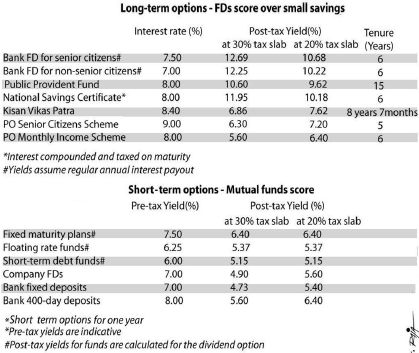
An interesting comparision done by Sowmya Sundar regarding the attractiveness of Fixed Deposits.


This mode of investment has been popular amongst the retail investors, but recently due to taxable nature of the interest earned and lower interest rates by banks, FDs had lost the sheen. With the finance minister announcing (PDF File) in 06 budget that

Last year, I recast the provisions relating to savings. Fixed deposits were not included. There is a demand that fixed deposits of certain tenure should qualify for tax exemption. I propose to include investments in fixed deposits in scheduled banks for a term of not less than five years in section 80C of the Income Tax Act.

the FDs will again be gaining popularities. Also with the RBI increasing the repo rates, the interest rates given by banks on FDs is on rise. This is a good news for retail investor, who does not want to risk his capital in the equity based markets. As per my knowledge, the banks are increasing the interest rates on FDs even more than what is depicted in the above picture...yoohoo... more the merrier !!

Marriage Certificate (OT)


(This is not related to finance, still thought it is useful info)

In a recent judgement, the Supreme Court of India, made the registration of marriage a compulsory act. The Center, States and the Union Territories are directed to amend the rules within three months. Some people have not liked the idea of SC directing the government to make a law, but overall the need for the law has been felt all along.
Global conventions have always pressed for compulsory registration of marriages. The article 16 (2) of the international Convention on the Elimination of all kinds of Discrimination against Women (CEDAW) — to which the Indian government is a signatory — says: “...all necessary action, including legislation, shall be taken to specify a minimum age for marriage and to make the registration of marriages in an official registry compulsory.”
Indian governemnt had always been reluctant to make this law. The reason being the Hindu Marriages. India being a country with diverse cultures and religions, most marriages are registered under various religious marriage acts. Under the Indian Christian Marriages Act, 1872, all marriages are entered into a church register after a wedding takes place. Registration is mandatory under the Parsi Marriage and Divorce Act, 1936. Muslim law, too, records a marriage in a nikahnama. And under the Special Marriage Act, 1954 — valid for all Indian citizens, irrespective of religion — every marriage is registered. But under the Hindu Marriage Act, 1955, a marriage does not have to be registered. Check out the section 8 of the act which does not make registration compulsory.
However certain state governments, did impose compulsory marriage registration law inorder stop the crimes committed against women and children and aimed at giving legal status to wedlock and to strengthen the institution of marriage. For example -

- The Bombay Registration of Marriages Act, 1953. This Act applies to the States of Maharashtra and Gujarat
- The Karnataka Marriages Act, 1976 in force since 1983
- The Himachal Pradesh Registration of Marriage Act, 1997
- Andhra Pradesh passed the Compulsory Registration of Marriage Act, 2002
Why you should get the marriage certificate?
-- With the new law there is no other option
-- It would be a valuable certificate where-ever you need evidence of marriage, espeically in government machinery and regarding financial
matters
-- If you are going abroad, then only this marriage certificate is accepted
-- This certificate will act as an evidence in case of any legal issues like divorse or bigamy problems
There is no such specific rule to get the marriage certificate, but following things usually apply
1) If you are married in a traditional way (i.e want a marrigae certificate after getting married), then you have to go to Marriage Registrar office of your area with wedding photos and certificate if given by any mandir/church etc. After filling the appropriate form and submitting the nominal fees, signature by both you and your spouse along with three-four withnesses should get you the certificate. You need an age proof too. Usually your High-School certificate or Passport should be enough.
2) If you are not married and want to get married in court, you need to apply and fill an application form. There is a one-month notice period for anyone else to object to the marriage. After the one month period, the above procedures apply.
3) The wedding registration is done by the same people who register property, births or deaths.
4) Getting a marriage certificate in another city than the one you got married in is a extremely tough thing, atleast now. So better go to the registrar office in the city you got married.
5) If you got married by any traditional way and want a certificate, it is usually better to visit the registrar office within three months. Otherwise the procedure is a bit complicated.
Here is the procedure in bit detail:

If you wish to have your marriage registered, you must approach the Sub-Registrar of marriages and assurances for the area. He is the same official of registration department who also registers sale deeds etc.

If you wish to register a Hindu marriage, then the following procedure must be followed:

-- The groom must be at least 21 years old and the bride must be at least 18 years old.

-- An application form must be filled out and presented to the Sub-Registrar

-- Prescribed fee for registration needs to be given

-- You must attend the Sub-Registrar's office along with your spouse and two witnesses, preferably parents of the couple.

-- You must produce evidence of marriage like wedding card, photographs etc

-- The Sub-Registrar can register the marriage within 6 months after the event.

If the marriage is to be registered after 6 months, you will have to apply to the District Registrar concerned in the application form for condonation of delay.

If you wish to register the marriage after 3 years, you will have to apply to the Inspector General of Registration for condonation of delay in the same form.

Registration at the venue of marriage:

If you wish to register the marriage at the venue, then you must apply for registration and ask for the Sub-Registrar's presence. The following fees must be paid to secure the Sub-Registrar's presence.

-- Application Fee

-- Transport charges for the Sub-Registrar

-- If the wedding is outside the Sub-Registrar's headquarter, then the daily allowance has to be paid as prescribed by government

Registration of a marriage under Special Marriages Act

A marriage can be registered under Special Marriages Act if it is not solemnized in a religious ritual. For such a marriage to be registered at the time of the wedding, you must apply at least a month in advance and fulfil the following conditions:

-- The bride must be at least 18 years of age and the groom must be at least 21 years of age. Proof of age must be furnished

-- Application with fee must be paid

-- A notice fee must be paid

-- A notice of 30 days will be given by Sub-Registrar to the public to raise objections if any. The notice will be displayed on his notice board.

-- If any one wishes to object to the marriage he must then pay an objection fee and file the objection petition stating reason

-- The Sub-Registrar will enquire into the objection and if he finds that the objection is valid, the registration application will be rejected.

-- If there is no valid objections, the marriage will be registered after 30 days

Registration of a marriage can be done under Special Marriages Act after the marriage in the same manner as a Hindu Marriage registration. However, there is a separate application, and witnesses and evidence of marriage must be produced.

So go and get the certificate quick !!

LOVE WHAT YOU DO ...


When your vocation becomes your vacation,
you'll never work another day in your life.

No one can succeed in any endeavor that they don't like.
If you don't love what you're doing, then don't do it.

Your chances of success are directly proportional
to the degree of pleasure you derive from what you do.

Do something that you have a deep personal interest in.
Do something you'd enjoy spending twelve to fifteen hours a day
working at, and the rest of the time thinking about.

Don't set compensation as your goal.
Find work you like and the compensation will follow.

Work is not your punishment.
It's your reward, your strength and your pleasure.

Real success is achieved when you like what you do.
Work is love made visible.

( Got this through email, how true it is? )

Repo and Reverse Repo rates

Recently RBI hiked the repo rates and reverse repo rates by 25 basis points. This is done to keep the inflation under control. The other side effect of it is the increase in home loan rates. Currently the fixed loan rate is around 10% and the floating rate is around 8-9%, with the repo rates increasing, the interest rates will also go up. Some estimates the fixed rate to touch the 11%, while the floating rate might reach the 9-10% mark.

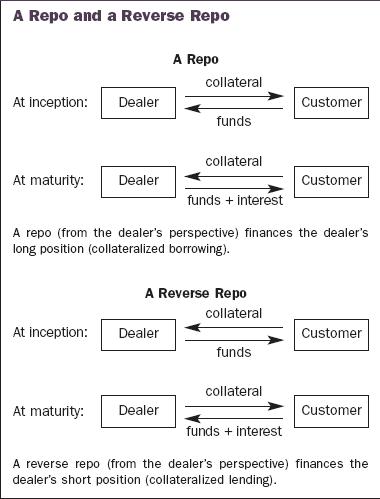
A repo is a repurchase agreement transaction that involves using a security as collateral for a loan. At the inception of the transaction, the dealer lends the security and borrows funds. When the transaction matures, the loan is repaid and the security is returned.

Repo rate: The rate of interest to be paid on a repo loan.


This picture is taken from Federal Reserve Bank of Atlanta E C O N O M I C R E V I E W Second Quarter 2002

The reverse repo rate is the rate at which the RBI borrows or absorbs excess funds from banks. And the repo rate is the rate at which banks can borrow money quickly from RBI. If the repo rate is increased, it makes difficult for banks to borrow quick short-term money from RBI, thus reducing the cash-in-hand capability of banks. With less cash with banks, they would want to lend it to the people for home or car loans at higher interest rates, so that they get protected against the reduction in funds.

Also with a increased reverse repo rate, RBI becomes the best borrower and hence all the banks would want to lend the money to RBI, which again causes a shortage of liquid funds in the market. Thus repo rates and reverse repo rates have become an important monetary policy instrument for RBI.

PS: Home Loans Hike by banks

Floating rate for HDFC home loans will be 9.5 per cent as against 9 per cent earlier, while the new fixed rate will be 11 per cent from 10.5 per cent. ICICI Bank, SBI indicated that they will wait and watch before taking any call on increasing rates.

Inflation

What is Inflation? It is a monster which eats away your money. Technically speaking, it is a fall in the market value or purchasing power of money. The idea is pretty simple. I remember the time when my dad use to get a salary of Rs 250 when he started working almost 70 years ago. His family status is what we can call a lower middle class family. Now compare the salary with what a typical lower middle class family will be earning today, like Rs 10,000. So what was Rs 250 seventy years ago is now equivalent to Rs 10000 now, a 40 times increase !! This is inflation. So it is essentially a real-life value of money which keeps on reducing.

Another important term that one usually comes across is ‘purchasing power’. It refers to the amount of goods and services a given money can buy. So Rs 250 seventy years ago would be sufficient to run a small middle-class nuclear family, while the same Rs 250 at present is insufficient even for single person’s one week food. So purchasing power of money has gone down in these seventy years. Inflation is nothing but a fall in purchasing power of money.

Mutual Funds are not for ordinary people !!

I was reading an article in The Economic Times (Dated 5th July 06). It talked about why the mutual funds are not suitable for ordinary investments. The author Rajrishi Singhal convincingly talks about the various reasons why the ordinary retail investers do not get enough service for the money they put into a mutual fund. I do not agree whole-heartedly with what the author says, since despite the entry-loads and the AMC charges which a fund applies on a retail investors, he is better off with MFs than direclty investing in stock markets. Any service provider will charge the consumers for the service it provides. It is a matter of demand and supply as to whether they are levying a higher fees. If the demand for MFs is high then they can easily charge higher fees. If we have more competition among MFs for attracting the retail investors, these charges would automatically drop. In India, still a huge percentage of popluation believes in investing in the governemtn backed secure options. Another point which the author makes is the need for research in investing in MF versus the research to be done in investing in stock market. I still feel that researching about MFs involves a lot less number of parameters than stock markets. The author also does not take into account the diversity of portfolio offerred by a MF. For a same amount fo diversity to be acquired while investing directly in stocks would need a lot of expertise and cash. The only point which I could agree here is the influence of a corporate in a mutual fund. Here is the entire article. The copyright belong to respective owners.


Mutual fund a big boys’ game

It’s not wise for the ordinary retail investor to put his money into a mutual fund; he’s probably better off investing directly in the stock market, argues Rajrishi Singhal

THIS definitely is the season for all kinds of heresies, and it’s time to add a home-grown doctrine of sacrilege. So, here goes: it’s not wise for the ordinary, retail investor to put his money into a mutual fund; he’s probably better off investing directly in the stock market! Sure, this doesn’t quite square with popular belief and common sense, which exhorts retail investors — largely, salaried and middle class people, lumped by market messiahs into this one-size-fits-all category — not to invest in stock markets but restrict themselves to mutual funds. But, it’s actually one big myth perpetrated to suck out cash from unsuspecting wallets. Here’s why. Most mutual funds remain intrinsically an instrument for large corporates to park their short-term surpluses, and only provide lip service to retail investors. The industry structure too has evolved to only accommodate bulk investors — largely cash-rich corporates — rather than to improve the ordinary individual investor’s savings and investment profile. Here are four key reasons why mutual funds have ended up being antithetical to the interests of genuinely retail investors. Reason 1: The vile villain in this topsyturvy scheme is an innocuous levy called “load factor”! This is the fulcrum around which all mutual funds have spun their web of inequity. This levy essentially charges all investors who invest below a certain threshold amount an “entry load”. For example, many funds charge all investors investing below Rs 5 crore an entry load of 2.25%. Assume you have invested Rs 10,000 in a particular mutual fund, in units of Rs 10 each. But, instead of costing Rs 10 each, the units will now cost you Rs 10.225 each. So, while you should have been allotted 1,000 units, you are now been allotted only 977 units! Therefore, the fund — which was set up with the mandate to make you richer — has made you poorer even before they invested a single rupee in the market. Talk of trusting your money to a complete stranger! Reason 2: The pillage does not end there. Most managements thereafter bill the fund a “management fee” and sundry other charges to take care of all the expenses incurred by the AMC management as well as to ensure that it has a margin at year-end to keep the AMC shareholders pleased. No issues about that, since no one expects the AMC to manage a pool of money for a bunch of anonymous investors without earning a fee. The discrimination lies elsewhere. The fee is levied on the total assets under management (which is the pool of invested money), and is shared alike by both bulk as well as retail investors. But for the wholesale investor, this is the only levy. For the retail sucker, this is a double whammy, in addition to the entry load. The exploitation of the poor retail investor does not stop here. The fund might end up losing wealth for the investor (as indeed many have in the past). In such an event, the investor has to exit with a sum lower than his original investment. Guess what? There is no change in what the AMC earns, whether the fund does well or disappears down the tube. The AMC’s earnings are performance-proof. What actually counts is the size of the fund, since the fee is usually a percentage of the assets under management. Therefore, the larger the fund size, the larger is the fee in absolute terms. THIS is the root of the cancer, called “entry load”. In their pursuit to ramp up assets under management, most fund managements spend aggressively on sales, marketing and distribution. In fact, most funds have tied up with third party distribution companies, which levy a huge fee that is higher than the 2.25% entry load and eats into the AMC’s fees and the other permissible expense charges. Most fund managers estimate that after meeting the distributor’s commission and recurring expenses (such as, printing, fees to registrar and transfer agents, property rentals, various administrative expenses and salaries), they are left with 0.70-0.75%, which is lower than that allowed by law. Therefore, what matters here is the size of the kitty and hence the race to ramp up assets; no wonder mutual funds are not only fawning all over the distribution guys but are loath to do away with “entry load”. Reason 3: It is an accepted fact that cor porates have an overwhelming presence in most funds. With such a sway over funds’ fortunes, most corporate actions do cause grief to retail investors. Here’s how. When one corporate decides to redeem its units in a mutual fund, the AMC is able to take it in its stride and not much harm is caused. But, usually, most corporates decide to move out of a fund herdlike, which then has fund managers scrambling around to sell investments to raise cash to meet redemption obligations. When that happens, it automatically harms the asset value of the fund. Guess who’s left holding the can? Reason 4: This one’s not about finding faults, but just an observation. Most retail investors are advised not to invest in shares since, as they are often admonished, they have neither the expertise to pick stocks nor the time to research individual companies. But, the same problem of multitude exists even in the mutual fund landscape. There are over 700-800 schemes today, with many offering multiple choices, leading to over 1,200 net assets values being published daily. So, if you want to invest in a fund today, you would need to research over 700 schemes. Does this not require skill, expertise, time, etc? A solution could be to make rating compulsory for all mutual funds, and to publish these ratings periodically. The cancer in the mutual fund industry has eaten so deep into the system that even regulators find certain doubtful practices as acceptable. In fact, this absurd cost structure, which corrodes a retail investor’s wealth, even has the sanction of law. In the past couple of years, thanks to some vigilant media pressure, the regulators have certainly pulled the plug on some corrupt practices and imprudent accounting methods that were directly benefiting corporates and fleecing the retail investors. But the regulators need to do much more before retail investors feel really comfortable with mutual funds and stop burning their fingers in the stock market. Till then, blasphemy will continue as the ruling faith.